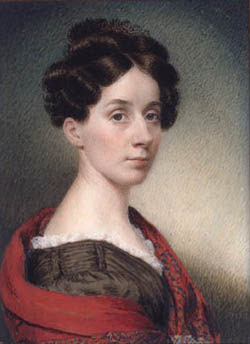
Showing posts with label Stuart (Gilbert). Show all posts

Sunday, February 17, 2013

George Washington: Founding Father of American Art?


“First in war, first in peace, and first in the hearts of his countrymen": those famous accolades have followed George Washington—first U.S. President and the beardless half of today’s Presidents’ Day holiday—since the very beginning of his transformation from man to myth in the American pantheon. Could Washington have been first in American art, too? In George Washington’s Eye: Landscape, Architecture, and Design at Mount Vernon, Joseph Manca aims to rehumanize Washington by “reassess[ing] his place in early American intellectual life,” specifically in the realm of art. Just as Washington helped America gain political independence, he helped foster an independent American art culture, knowing that there was more to being a nation beyond bills and bullets. Was George Washington the founding father of American art? Please come over to Picture This at Big Think to read more of "George Washington: Founding Father of American Art?"


[Many thanks to The Johns Hopkins University Press for providing me with a review copy of Joseph Manca’s George Washington’s Eye: Landscape, Architecture, and Design at Mount Vernon.]

Sunday, November 2, 2008

Looking Presidential


In celebration of Halloween, the October Art Poll By Bob asked, “Which of the following paintings seems the spookiest?” You voted William Blake's The Ghost of a Flea (1819-1820) as the spookiest, with 17 votes. Arnold Böcklin's The Isle of the Dead (1880) and Salvador Dalí's Soft Construction with Boiled Beans (Premonition of Civil War) (1936) tied for second, with 15 votes each. Edvard Munch's Vampire (1893-1894) with 11 votes, Henry Fuseli's The Nightmare (1781) with 10 votes, Albert Pinkham Ryder's The Race Track (Death on a Pale Horse) (1895-1910) with 9 votes, and Andrew Wyeth's Jack Be Nimble (1976) with 5 votes rounded out the field. Suffering the indignity of the first shutout in Art Poll By Bob history, David Wojnarowicz's Fire (1987) came in dead last with the doughnut of shame.

In honor of the tomorrow’s United States Presidential Election, I’ve decided to ask “Which of the following official Presidential portraits seems the most presidential to you?” (The Obama carved pumpkin [above, from Yes We Carve] would be an unconventional, yet very cool choice.):

Gilbert Stuart, George Washington (aka, the Lansdowne portrait, 1796)


Rembrandt Peale, Thomas Jefferson (1800)


George P.A. Healy, John Quincy Adams (1858)


George P.A. Healy, Abraham Lincoln (1869)


Anders Zorn, Grover Cleveland (1899)


John Singer Sargent, Theodore Roosevelt (1903)


Aaron Shikler, John F. Kennedy (1970)


Simmie Knox, Bill Clinton (2000)

Stuart’s almost regal Lansdowne Portrait actually started the tradition of official presidential portraits. Little-known George P.A. Healy painted every official presidential portrait from John Quincy Adams through Ulysses S. Grant, so he made the list twice. (Plus, I think he captured the stiffness of J.Q.A. perfectly.) Peale, Zorn, and Singer all earned fame beyond their momentary brush with high office. Shikler’s haunting posthumous portrait of JFK is familiar to most Americans even if the artist’s name isn’t. Simmie Knox makes the list for being the first African-American artist to paint an official presidential portrait and for capturing the Big Dog perfectly. I wish I could have added Thomas Eakins’ lost portrait of Rutherford B. Hayes. Eakins reportedly painted Hayes working at his desk on a sweltering summer day as bullets of sweat streamed down his reddened face. First Lady and Temperance movement queen “Lemonade” Lucy Rutherford reportedly so hated the portrait that she had it destroyed. The idea of a hard-working president seemed uncouth, I guess.

So, rock the vote and vote for the most “presidential” presidential portrait. And, tomorrow, vote for the most presidential president!

[This is Bob of Art Blog By Bob and I approve this message.]

Monday, October 13, 2008

Blind Ambition


When Benjamin West burst onto the English art scene in 1763, the brash American with a head full of Raphael and Titian thanks to his recent travels in Italy made few friends when King George III commissioned West to paint the royal family. Sir Joshua Reynolds and others turned their backs on the young artist they saw as too ambitious in infringing upon “their” territory. By 1768, however, West’s personal charm and artistic talent won the English artists over and he joined them in founding the Royal Academy of Arts, eventually succeeding his friend Reynolds as the academy’s second president in 1792. Born October 10, 1738, West stands as one of the first great American artists, yet the majority of his great works have nothing to do with America. West’s breakout work The Death of General Wolfe (above, from 1770) turned heads with its dramatic rendition of the final moments of the life of British General James Wolfe during the Battle of Quebec. By posing Wolfe as a fallen Christ figure, literally ripping off the composition and figures of the Renaissance, West fit in with the art ethos of the time in history painting. However, by allowing the figures to wear contemporary dress and not shrouding them in the togas of classicism, West changed the rules of the game, ambitiously aiming at a type of realism not seen before in history painting that opened the doors for Jacques-Louis David and his Neoclassicism on the verge of Romanticism.


Growing up in Philadelphia, it was hard not to see the works of West. The PAFA features two works by West that bookend their main staircase. To see these huge works you almost have to stand on the opposite side of the stairs, since there’s not enough room to back away from them without tumbling over the railing. A smaller work at the PAFA, West’s The Treaty of Penn with the Indians (above, from 1771-1772), presents an idealized version of the transaction in which William Penn secured land from the Native Americans to extend Pennsylvania. West reportedly first learned how to mix colors from the Native Americans living in Springfield, Pennsylvania, his birthplace (not far from where I live today). Like Penn, West was a Quaker and applied that sect’s principles of brotherhood and pacifism to Native Americans even when most whites considered them less than human.


It’s easy to discount the works of West today. Although he was hailed as “the American Raphael” in his day, many of his figures in his epic-sized works seem cartoonishly stilted today. The great draftsmanship of smaller works such as his altarpiece titled The Conversion of St. Paul (above, from 1786) is largely forgotten today, although he exhibited it to great acclaim during his lifetime. If critics can’t be converted to West’s talent, they should at least be open to accepting his role as a pivotal figure in early American painting. While living in London, West opened his doors to any American artist looking for guidance or a place to stay on their way to study in Europe. Such artists as Gilbert Stuart, Charles Willson Peale, John Singleton Copley, Washington Allston, John Trumbull, Thomas Sully, and Samuel F. B. Morse all spent time in West’s studio and home, learning with the master. Matthew Pratt actually painted a tribute to West’s open house titled The American School. Like later critics, many of these artists rejected West’s teachings after accepting his kindness, but West had greater ambitions for American art than the simple continuation of his personal style.

Wednesday, February 6, 2008

Small Wonders


At a time when few American male artists achieved a high standard to match their European counterparts, Sarah Goodridge stood as one of the few women artists who rose to the heights of the profession. Born February 5, 1788, Goodridge painted her own self-portrait many times, including one in 1845 shown above. In that Self-Portrait, done in miniature in a tiny display case, as were most of her small, delicate, detailed works, Goodridge portrays herself working hard at her profession of painting, borrowing from the tradition of male painters who portrayed themselves proudly at work. Rather than looking confidently at the viewer, however, as most male artists did in their professional self-portraits, Goodridge lowers her eyes to the task at hand in a gesture that can be seen as one of feminine humility or, as I prefer to see it, one of concentration in the task at hand and a disdain for the recognition she knew was never coming as she neared the end of her life.


One of the leading miniaturists in the Boston area in the first half of the nineteenth century, Goodridge knew and painted many of the famous figures of her day, including Ralph Waldo Emerson and Daniel Webster. The Self-Portrait of 1830 (above) shows Goodridge at the height of her powers, confidently looking out of one of her own miniatures. After the death of Webster’s wife, however, that relationship may have become much more intimate. The 1828 self-portrait now known as Beauty Revealed may have been a gift from Goodridge to Webster, who kept it in his possession for the rest of his life. In Beauty Revealed, Goodridge painted her own breasts on a small piece of ivory so thin that light could shine through it, accentuating the glowing effect of the alabaster skin. Around the breasts, the displaced clothing acts almost as a curtain opening upon a private show. John Updike and others have surmised from this image and the fact that Webster’s heirs destroyed all of Goodridge’s letters to Webster as proof that the artist and the statesman conducted a heated affair. However, Beauty Revealed is more evidence of Goodridge’s skill and amazing self-confidence than of any love affair.


In a way, it’s a shame that Goodridge restricted herself to miniatures, such as the one above. Self-taught, Goodridge did receive some instruction from Gilbert Stuart, but her success came almost exclusively from her own abilities and in the face of the pervasive sexism of her time. Women artists of that time, even those as talented as Goodridge, were often forced to paint miniatures out of the belief that they were too frail for grand history painting. Fortunately, most museums recognize the skill involved in these tiny portraits and display them with contemporary works on canvas, but the size and fragility of these works continues to contribute to their being overlooked. Any history of women artists in America should start with Sarah Goodridge, the woman brave enough to bare herself to the world, even if at first only to an audience of one.

Wednesday, December 5, 2007

Finish What You Started


How many Americans today could identify the classic portrait of George Washington on the one dollar bill as copied after the work of Gilbert Stuart? Fewer would even know that the original work (aka, The Athenaeum Portrait; above, from 1796) was never finished, just like the companion portrait of Martha Washington. Born December 3, 1755, Stuart earned a reputation as both the finest American portraitist of his time and the unreliable, debt-ridden, exasperating artist who failed to deliver time and again. Stuart lived large and well beyond his means, enjoying the company of the rich and powerful, including the men who would become the first six presidents of the United States, all of whom Stuart painted, or at least began painting.


Although born in the American colonies and beginning a career as an artist there, Stuart traveled to England to complete his training in 1775 as the hostilities that would become the American Revolution began. Whereas artists such as John Singleton Copley remained in America and adapted from portraits of the upper class to portraits of the new mercantile class, Stuart followed the money and continued to paint members of the upper class. His portrait of William Grant, better known as The Skater (above, from 1782) shows the influence of Benjamin West, who befriended and taught his fellow former colonist. Stuart soon commanded prices rivaling those demanded by Joshua Reynolds and Thomas Gainsborough. Unfortunately, success spoiled Stuart and his spendthrift ways forced him to flee to Ireland in 1787 to avoid debtor’s prison.


Stuart returned to America in 1793, after the Revolution. He soon began painting the new nobility of the young American nation, earning the distinction of being one of the few artists to have painted both King George III and George Washington. Stuart’s finished portrait of George Washington (aka, The Lansdowne Portrait; above, from 1796) shows the founding father in an almost royal pose, incongruous with the ideal of the early republic. When the nation’s capital moved to Washington, DC, Stuart opened a studio there in 1803 to be close to the seat of power. Stuart’s personal charisma made him the favorite portraitist of many of his subjects, charming even the curmudgeonly John Adams with his conversational skills. Sadly, like his contemporary Thomas Lawrence’s alcoholism, Stuart’s financial incompetence stood in the way of him achieving even greater things in art.

Monday, October 15, 2007

To France and Back


When Aaron Burr had to flee the United States and find sanctuary in Paris, his one-time protégé John Vanderlyn remained faithful and loaned money to the disgraced politician. Born October 15, 1775, Vanderlyn cozied up to many political figures, starting with Burr, whom he painted in 1801 (above) at the height of his power as Vice President of the United States, just a few votes away from the Presidency itself. While Vanderlyn studied under Gilbert Stuart, Stuart had Vanderlyn copy a portrait of Burr, beginning a relationship that would lead to Burr’s patronage that would send Vanderlyn to Paris in 1796 to study art—the first instance of an American artist traveling to France rather than England to study. Vanderlyn returned with a fine neoclassical education, lending an air of classicism to his portraits of later presidents James Monroe, Andrew Jackson, and Zachary Taylor.


Vanderlyn’s neoclassicism and Franco-philia led him to paint one of the first great nudes of American art—Ariadne (above), currently at the PAFA. Into the conservative art world of the still-young United States, Vanderlyn injected a taste of French Salon art with this satiny, almost porcelain-skinned nude. Seeing this painting in person at the PAFA, you feel a chill from the almost inhuman coldness of the figure, more marble than flesh. In the early nineteenth century, however, Vanderlyn’s Ariadne seemed too hot to handle, barely making it past the gates of respectability thanks mainly to his use of Greek mythology in his title and the desire of the art intelligentsia of the early republic to bring a European sophistication to American art. Vanderlyn’s Parisian training led him to view American art in a poor light as trailing behind European standards thanks to its puritanical baggage.


Vanderlyn struggled financially throughout his career, despite his powerful connections. Those connections landed him a commission in 1842 to paint The Landing of Columbus (above) as part of a series of paintings to hang in the Capitol Rotunda. (Rumors surround the work claiming that Vanderlyn, fearing his loss of skill, paid another painter to do it for him.) An engraving of The Landing of Columbus later appeared on the United States $5 bill. Sadly, Vanderlyn never found the proper outlet for his Parisian-honed skills—never rising to the front ranks of portraitists, failing at the genre of blockbuster panoramas ala Frederic Edwin Church despite opening up his own New York City gallery, and never succeeding at creating the new standard of taste he hoped Ariadne would engender. However, as the first American artist in Paris, he set the stage for the generation of Thomas Eakins, Mary Cassatt, and John Singer Sargent, all of whom would bring a taste for French art back to their homeland with a distinctly American flavor.

Friday, October 12, 2007

Transatlantic


Walking up the grand staircase of the PAFA, you slowly become aware of the two gigantic paintings on either side on the second floor, both by Benjamin West, one of the first major painters in American art. Born October 10, 1738 among a Quaker community in Springfield, Pennsylvania, West painted epic scenes from the Bible and history, many of which are still in Philadelphia over 200 years later. Perhaps my favorite West painting at the PAFA, William Penn’s Treaty with the Indians (above, from 1771) shows the moment at which Pennsylvania and Philadelphia were born. West claimed that he first learned how to mix colors and paint from the Native Americans who lived nearby, which may have helped him in painting them in a sympathetic light in this painting—more noble savage than savage period. West served as a militia captain during the Indian wars of the 1750s, yet still didn’t adopt the common prejudice against Native Americans. This humanity helped catapult West into a grand career at a portraitist and, later, history painter.


West found success painting portraits of prominent Philadelphians, including his friend Benjamin Franklin, between 1746 and 1759. In 1759, wealthy patrons sponsored his trip to Italy to study the works of the masters such as Titian and Raphael. (Londoners would later call West “the American Raphael.” ) He moved to England in 1763 and soon became painter to King George III. West truly put himself on the art map with The Death of General Wolfe (above, from 1770), a stunning historical portrait of the dying hero cast in a classical light yet portrayed without classical dress—an innovation that fast forwarded epic history painting to the recent past. West paints in a bombastic style, with almost garish color. His figures strike theatrical poses that hammer home the message, with Wolfe himself posed like a Renaissance Christ freshly lowered from the cross. In The Death of General Wolfe, a Native American crouches in the middle, musing upon the death of Wolfe with his chin resting on his fist, as pensive as Rodin’s Thinker itself in the face of such heroic grandeur. As the second president of the Royal Academy of Art, after Sir Joshua Reynolds, West’s own thoughts on art influenced generations of artists on both sides of the Atlantic.


West’s giant paintings intimidate you with their size and scope. The PAFA's Death on a Pale Horse (above, 1817) hovers over you with the force of revelation, threatening to trample you in its path. Seeing this at the PAFA, you wish you could keep moving further and further back, but the railing of the staircase traps you. At Pennsylvania Hospital in Philadelphia, you can see West’s Christ Healing the Sick with plenty of room to move back, which seems to diminish the power of the painting. West’s works almost refuse to allow you to take them all in at once, forcing you to move about them as if you yourself were there in the scene. When an earlier version of the PAFA building burned down in the nineteenth century, firefighters had to cut West’s painting from the frame and roll it up to save it from the flames. The crowd assembled reportedly cheered at the sight of the saved behemoth. West’s paintings may have lost some favor with critics, but his influence on later American artists such as Charles Willson Peale, Gilbert Stuart, and John Singleton Copley will always save a place for him in the history of American art.

Monday, September 24, 2007

School Master


When Matthew Pratt’s cousin Betsy Shewell needed an escort for her trip to London in 1764 to marry the painter Benjamin West, Pratt jumped at the chance and changed the course of his life. Born in Philadelphia, Pennsylvania, on September 23, 1734, Pratt became West’s assistant and then his first student, learning the profession of painting from one of the first accomplished painters associated with America. The American School (above) shows West’s studio in London circa 1765. West stands at the left, offering instruction to a student with a slate. Pratt places himself seated before the easel on the right, already seeing himself as a true professional. After four years with West, Pratt returned to Philadelphia in 1768 and embarked on his career as one of the premier portraitists of pre-Revolutionary America.


Philadelphia bustled with commercial, cultural, and political activity when Pratt returned to ply his trade. “The Athens of America” found itself at the crossroads of the waning days of colonialism and the emerging era of a new, free, democratic republic. Pratt painted royalists and revolutionaries alike. Figures such as William Henry Cavendish Bentinck, 3rd Duke of Portland (above), painted in 1774, with their frilly lace cuffs, represent the royalists still clinging to hope that a separation with England could be avoided. Pratt painted all the famous figures of Philadelphia, including the wife of then-mayor Samuel Powel, Elizabeth Willing Powel. That portrait still hangs in the restored Powel House in Philadelphia, as vibrant as the day it was painted. Pratt learned well from West, using the same smooth surface technique and simple colors of his teacher.


After the revolution began in 1776, Pratt’s fortunes wavered. In portraits such as that of Commodore John Barry (above), painted in the fateful year of 1776, Pratt tries to switch gears and keep up with the times. Unfortunately, the quick switch from high society to heroes of the revolution didn’t suit Pratt’s style. Other portrait artists, such as Gilbert Stuart and John Singleton Copley, whom Pratt met in New York City in 1771, seamlessly adjusted to the new spirit in the air and churned out portraits of the new major society players. Pratt remains an interesting figure in pre-Revolutionary Philadelphia for how he captured and in some ways epitomized a way of life on the way out.

Thursday, September 20, 2007

Household Gods


Thanks to the prompting of a friend, I recently visited the Powel House (above) here in Olde City Philadelphia, one of the best examples of 18th century Georgian architecture in the city. Samuel Powel, the last pre-Revolutionary War and first post-Revolutionary War mayor of Philadelphia, purchased the home in 1769, four years after it was built. Along with his wife Elizabeth, Powel conducted business with and partied with the biggest names of colonial America. What really knocked me out was their collection of artworks.


A portrait of Powel painted by Angelica Kauffmann hangs in the entrance hall. In the dining room hangs a self-portrait by Kauffmann, allegedly a gift from her to one of Powel’s relations who had grown smitten with the artist while traveling in England. (A different self-portrait by Kauffman appears above.) Portraits of various family members cover the walls of both floors open to the public. Many show the common technique used by for hire portraitists of the time in which they painted standard bodies in their studio and then had the subject sit only for the head, which often didn’t match up properly with the body. A portrait of Elizabeth Powel by Matthew Pratt, one of the finest portraitists of colonial Philadelphia, shows just how far American art had come by that time. Upstairs, in the music room, where George Washington himself celebrated his birthday and his 20th wedding anniversary (reportedly without Martha), a portrait of a young woman related to the Powels painted by Gilbert Stuart shows his mature style at its best.


I found it fascinating to see this wonderfully restored home and how it reflected the art tastes of the time. An etching of a Rembrandt self-portrait displayed in one of the front rooms used for business testifies to the master’s renown at that time. Samuel Powel himself dabbled in the common form of amateur portraiture of the age known as the silhouette, creating two of George Washington now on display. Washington approved of the likeness shown above, but disapproved of the jowlier version with the double chin sagging beneath. Although you can fit everything I know about furniture on an IKEA gift card, even I could tell that the period furniture displayed was absolutely beautiful and built to last. If you’re ever in Philadelphia and have exhausted the big name tourist attractions, do yourself a favor and step back in time and see how the rich and powerful art lovers of that time lived.

Tuesday, June 19, 2007

Another Pretty Face


Thomas Sully, American painter born in England on this date in 1783, was one of the most celebrated portraitists of his age on both sides of the Atlantic. His portrait of the young, pre-“We are not amused,” Queen Victoria, circa 1838, appears above.


Sully studied in America under Gilbert Stuart and later went back to England to study with Benjamin West. During his travels, Sully was able to paint portraits of most of the major political and cultural figures of the day. His portrait of an aging Thomas Jefferson appears above. Sully painted portraits of other revolutionary war figures, such as George Washington and John Adams, as well.


I’ve seen Sully’s portrait of the famous early 19th century actress Fanny Kemble (titled Frances Anne Kemble as Beatrice, above) at the PAFA many times. Sully specializes in a wonderful dreamy look that works well in depicting women and children romantically, but not so well for historic figures such as Jefferson or Washington. I’m sure young Queen Victoria appreciated the gentle touch, but as much as I see a kindness in the face of Sully’s Jefferson that I believe was there in real life, Jefferson seems to dissipate into thin air in his painting rather than stand as firm as his convictions, something I’ve always sensed in the American Revolutionary portraits of Charles Willson Peale and Stuart.


Child Asleep (The Rosebud) (above) from 1841 epitomizes Sully’s approach for me. It’s a lovely scene that tugs at anyone’s heartstrings, whether they’re a parent or not, but it lacks definition and form beneath the light romantic touch. Sully often draws comparisons to Sir Thomas Lawrence, whose work influenced Sully’s studies in England, but Lawrence’s work has a substance I don’t see in Sully’s. As I’ve remarked before, there’s a life in the eyes of Lawrence’s portraits that few can match. Where Lawrence paints a true, living image, Sully is sadly just another pretty face.